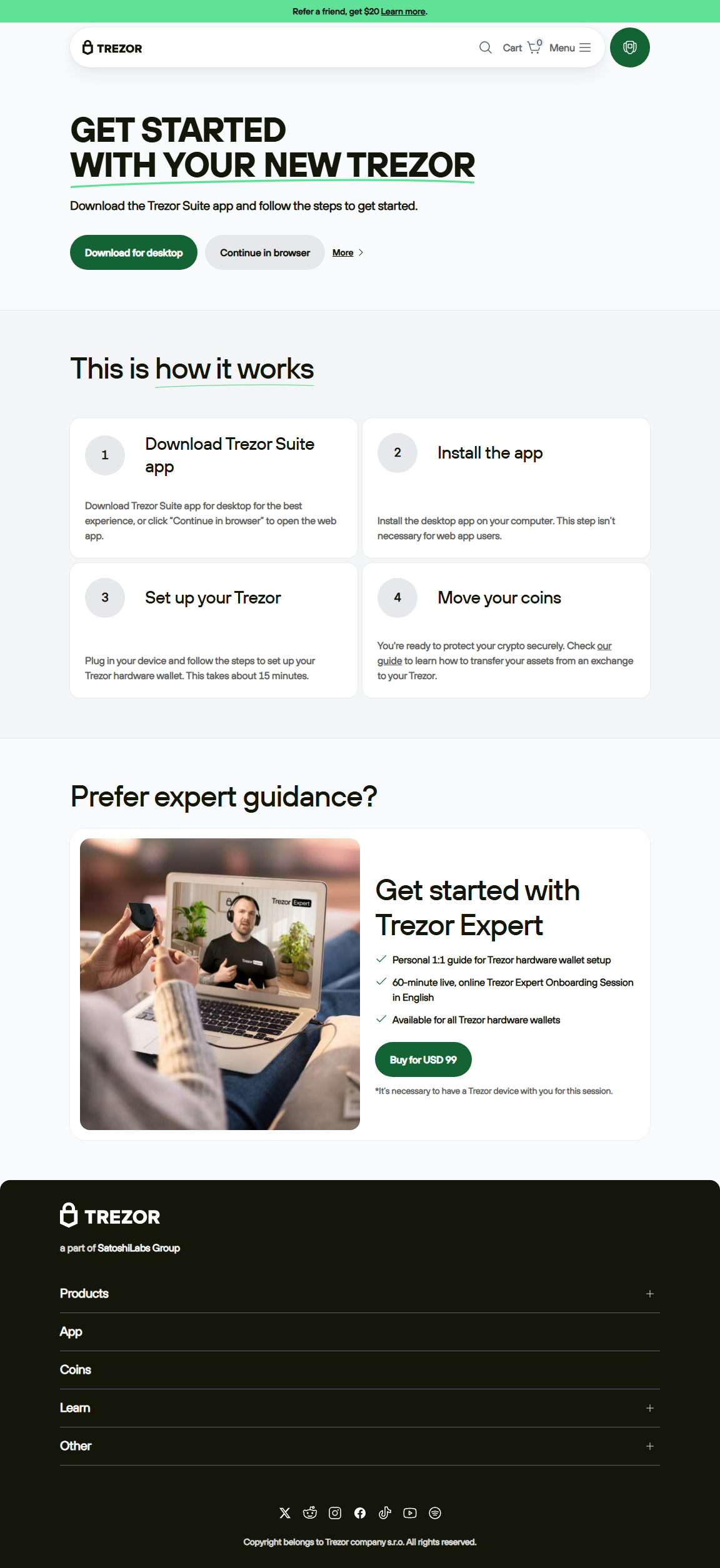
Your Ultimate Guide to Starting with Trezor Hardware Wallets
If you're venturing into the world of cryptocurrency, securing your digital assets is paramount. While exchanges offer convenience, they don't provide the level of security that hardware wallets like Trezor do. Trezor hardware wallets offer a secure, offline solution for storing cryptocurrencies, ensuring that your coins remain under your control.
This guide will walk you through the process of setting up your Trezor hardware wallet, managing your crypto portfolio, and implementing best practices for security.
Why Choose a Trezor Hardware Wallet?
Imagine your cryptocurrency as cash in a physical wallet. Leaving it online is akin to leaving your money on a café table—it's vulnerable to theft. Trezor devices act as a digital safe, storing your private keys offline. Without these keys, no one can access your funds.
Trezor hardware wallets are widely trusted because they combine simplicity, portability, and robust security. They support a vast range of cryptocurrencies, from Bitcoin and Ethereum to emerging altcoins.
Choosing the Right Trezor Device
Trezor offers several models to cater to different user needs:
- Trezor Model One: A compact and affordable option supporting a wide range of cryptocurrencies.
- Trezor Model T: Features a touchscreen interface, enhanced security features, and support for more cryptocurrencies.
- Trezor Safe 5: The latest model offering advanced security features and a customizable user interface.
Choose the device that best suits your needs and budget. All models provide top-tier security for your digital assets.
Unboxing and Verifying Your Trezor
Upon receiving your Trezor device, ensure that the packaging is sealed and untampered with. Inside the box, you should find:
- The Trezor device
- USB cable
- Recovery seed cards
- Quick start guide
Before connecting your device, verify its authenticity. Trezor provides instructions for identifying genuine devices on their official website.
Installing Trezor Suite
Trezor Suite is the official application for managing your Trezor hardware wallet. It allows you to manage assets, send and receive cryptocurrency, and install apps for different coins.
To install Trezor Suite:
- Visit the official Trezor website.
- Download the appropriate version for your operating system.
- Follow the installation instructions and launch the application.
Trezor Suite is essential for syncing your device with accounts and monitoring balances securely.
Setting Up Your Trezor Device
When setting up your Trezor, you'll create a PIN code and write down your recovery seed. Here's why these steps matter:
- PIN Code: Protects your device from unauthorized access. You'll enter it every time you connect your Trezor.
- Recovery Seed: A 24-word phrase that acts as a backup. If your Trezor is lost or damaged, this phrase allows you to recover your wallet.
It's critical to store your recovery seed offline in a safe place. Never take a photo of it or store it digitally, as that would compromise your security.
Adding Cryptocurrency Accounts
Trezor Suite lets you add multiple cryptocurrency accounts. To do this:
- Open Trezor Suite and click on "Accounts".
- Select "Add account" and choose the cryptocurrency you want to manage.
- Follow the prompts to sync the Trezor device with the account.
You can now see balances, manage multiple coins, and track transactions, all while keeping private keys offline.
Sending and Receiving Crypto Safely
Transactions are simple but require careful verification:
- Receiving: Click "Receive" in Trezor Suite, select the correct account, and confirm the address on your Trezor device.
- Sending: Click "Send", input the recipient's address and amount, and verify all details on your Trezor before confirming.
Always verify addresses on the device screen, not just on your computer, to avoid phishing attempts.
Installing Apps for Different Cryptocurrencies
Each cryptocurrency requires its own app on the Trezor device:
- Go to "Manager" in Trezor Suite.
- Select the app for the coin you wish to manage.
- Click "Install" and sync it with your device.
This modular approach allows you to manage multiple assets securely without overloading your device.
Firmware Updates
Trezor periodically releases firmware updates to enhance security and compatibility. Always update promptly:
- Connect your device and open Trezor Suite.
- If an update is available, Trezor Suite will guide you through the process.
- Follow all on-screen prompts to complete the update safely.
Firmware updates are vital to maintain security against evolving threats.
Security Best Practices
- Never share your recovery seed.
- Keep your Trezor device and recovery seed separate and secure.
- Verify Trezor Suite downloads only from the official website.
- Beware of phishing links or unsolicited emails claiming to be support.
- Consider a fireproof or secure physical storage for your recovery seed.
"Owning crypto means owning responsibility. Security is your most valuable asset."
Common Mistakes to Avoid
Even experienced users sometimes make simple mistakes:
- Storing recovery seeds digitally or online.
- Using second-hand Trezor devices without verification.
- Ignoring firmware updates for months.
- Clicking on links from unofficial sources claiming to assist with Trezor.
Avoiding these pitfalls keeps your assets safe and secure.
Why Trezor Stands Out
Trezor is recognized for combining top-notch security with user-friendly design. Features that make it reliable include:
- Strong offline security for private keys.
- Compatibility with hundreds of cryptocurrencies.
- Regular updates for security and functionality.
- A robust community and official support resources.
Conclusion
Setting up your Trezor hardware wallet is a foundational step in securing your cryptocurrency. By following this guide, practicing safe security habits, and staying updated, you can confidently manage your digital assets without fear of hacks or loss.